

Vitamin Water vs Gatorade vs Powerade: Which Is Better?
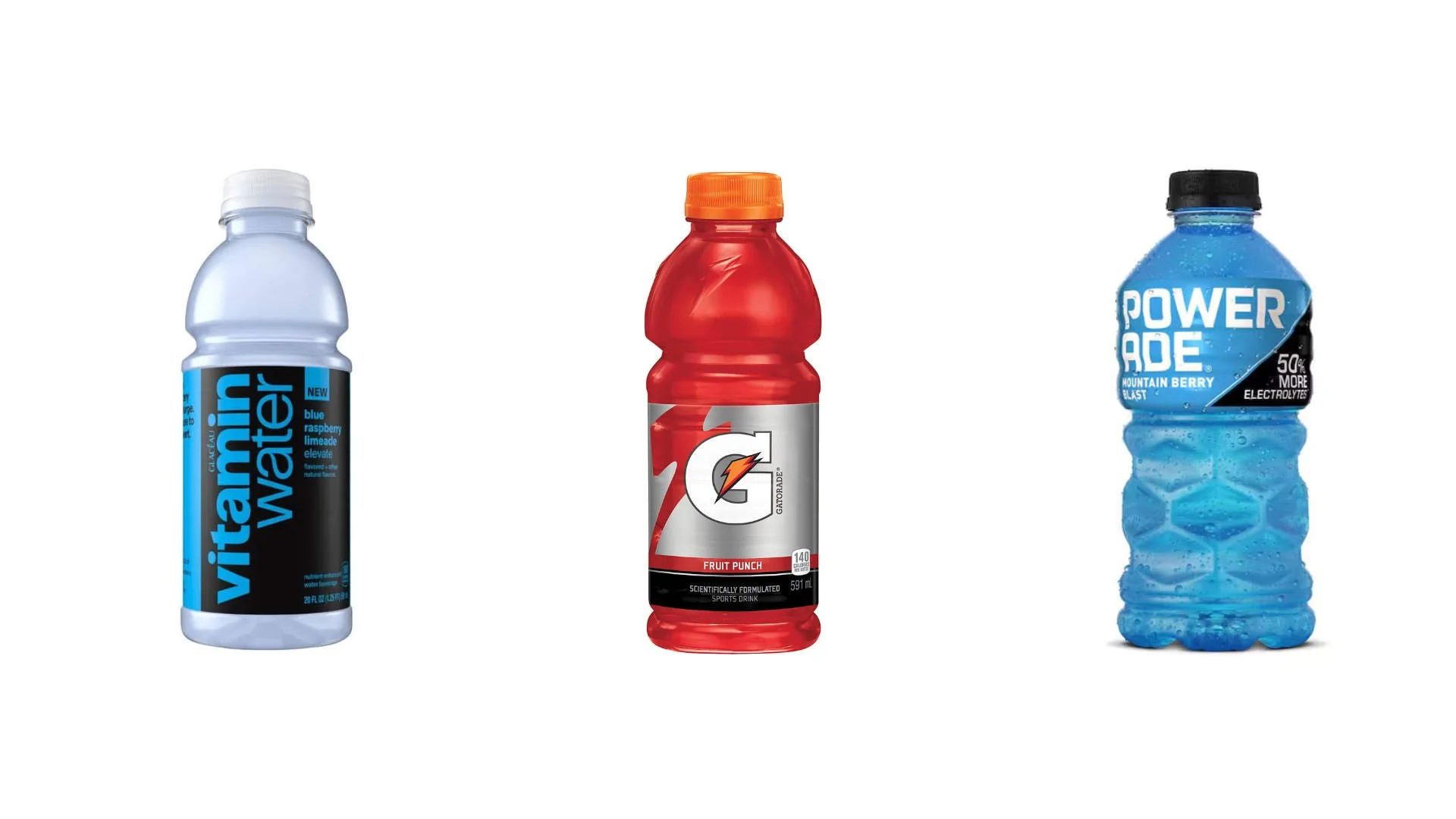
Vitamin Water vs Gatorade — which is better? And is Vitamin Water actually good for you?
Vitamin Water is often compared with sports drinks like Gatorade and Powerade. The key difference is electrolytes: traditional sports drinks contain sodium for sweat replacement, while Vitamin Water contains little sodium and functions primarily as a vitamin-fortified beverage. [1][2]
At a Glance
Electrolytes: Gatorade / Powerade
Vitamins: Vitamin Water
Hydration: Water
Below, we break down electrolytes, sugar, and ingredients so you can decide what’s better for your goals.
Quick Answers
Vitamin Water vs Gatorade: Which Is Better?
Gatorade is better for hydration during exercise because it contains more sodium. Vitamin Water contains added vitamins but little to no electrolytes for sweat replacement.
👉 Jump to the full Vitamin Water vs Gatorade comparison
Is Vitamin Water Good for You?
Vitamin Water is not ideal as a daily health drink due to its added sugar content of 14 g per 250 mL and minimal electrolytes.
👉 Jump to the full health breakdown
Vitamin Water vs Powerade: Which Is Better?
Powerade is better for hydration during exercise. Vitamin Water is better for added vitamins.
👉 Jump to the full Vitamin Water vs Powerade comparison
Vitamin Water vs Gatorade vs Powerade: What’s the Difference?
Gatorade and Powerade are sports drinks designed for electrolyte replacement. Vitamin Water is primarily a flavored vitamin beverage and not formulated for sweat replacement.
👉 Jump to the full differences explained
What Has More Electrolytes: Gatorade or Vitamin Water?
Gatorade contains more electrolytes, primarily sodium, than Vitamin Water.
Is Vitamin Water Good for You?
For everyday hydration, Vitamin Water is not considered a healthy beverage choice.
A standard 250 mL serving contains 14 grams of added sugar. [2] The American Heart Association recommends limiting added sugar to: [3]
25 grams per day for women
36 grams per day for men
That means one serving provides:
About 56% of the daily added sugar limit for women
About 39% of the daily limit for men
While it contains added vitamins such as vitamin C and certain B vitamins, those nutrients are widely available from whole foods without added sugar. Its sodium content is minimal, so it does not function as an effective electrolyte replacement drink.
During prolonged or high-intensity exercise, the carbohydrates in these drinks can help support performance. [4] For daily hydration, plain water or unsweetened beverages are generally the healthier option.
In practical terms, Vitamin Water is best viewed as a flavored beverage with added vitamins — not a health drink and not a substitute for water.
Vitamin Water vs Gatorade vs Powerade: What’s the Difference?
The primary difference comes down to electrolytes versus vitamin fortification.
Traditional sports drinks like Gatorade and Powerade are formulated around measurable sodium to help replace electrolytes lost through sweat. They also contain carbohydrates to support energy during prolonged activity.
Vitamin Water, by contrast, emphasizes added vitamins and flavor, but contains minimal sodium. [2] While it provides carbohydrates, it is not structured specifically for electrolyte replacement during heavy or extended exercise.
In simple terms, sports drinks prioritize sodium-driven hydration support, while Vitamin Water prioritizes micronutrient fortification in a flavored beverage.
Electrolytes: Vitamin Water vs Gatorade vs Powerade
When comparing Vitamin Water vs Gatorade vs Powerade, the most important electrolyte is sodium. [1]
Vitamin Water contains little to no measurable sodium, depending on the variety. In contrast, traditional sports drinks such as Gatorade and Powerade include sodium specifically for electrolyte replacement during exercise.
Below is a side-by-side comparison based on publicly available nutrition labels.
| Drink (per 250 mL) |
Sodium | Designed for Sweat Replacement? |
|---|---|---|
| Vitamin Water | Not a significant source | No |
| Gatorade | 114 mg | Yes |
| Powerade | 169 mg | Yes |
All values are based on publicly available nutrition labels at the time of writing. [2][5][6]
Product Variations Used for Comparison
The following products were used for the nutrition comparisons in this article (per 250 mL serving):
Vitamin Water – Elevate (Blue Raspberry) [2]
Powerade – Mountain Berry Blast [6]
Gatorade – Fruit Punch (Red) [5]
Vitamin Water Zero – Acai Blueberry Pomegranate [7]
Gatorade Zero – Cool Blue [8]
Nutritional values may vary slightly by flavor and regional formulation.
Does Vitamin Water Have Electrolytes?
Vitamin Water sodium content is minimal compared to traditional sports drinks. Some varieties include trace minerals, but Vitamin Water is not a meaningful source of sodium compared with sports drinks.
Because of that, Vitamin Water is generally not formulated for prolonged or heavy sweat loss. If your goal is sweat replacement, sodium content becomes the deciding factor.
What Has More Electrolytes: Gatorade or Vitamin Water?
Gatorade contains significantly more sodium than Vitamin Water.
Per 250 mL:
Gatorade: 114 mg sodium
Vitamin Water: Not a significant source
This difference separates sports drinks from vitamin-enhanced beverages. Gatorade is structured to replace electrolytes lost through sweat, while Vitamin Water focuses primarily on added vitamins rather than sodium-driven hydration support.
For exercise lasting longer than about 60 minutes or involving heavy sweat loss, sodium intake becomes more important.
Sugar Content: Vitamin Water vs Gatorade vs Powerade
While electrolytes determine hydration performance, sugar content plays a major role in how these drinks fit into a daily diet.
All three beverages contain added sugars, primarily in the form of carbohydrates intended to provide energy during activity.
Below is the full nutrition comparison.
| Nutrient (per 250 mL) | Vitamin Water | Gatorade | Powerade |
|---|---|---|---|
| Sugars | 14 g | 14 g | 15 g |
| Sodium | Not a significant source | 114 mg | 169 mg |
| Calories | 59 | 59 | 56 |
| Total Carbohydrates | 14 g | 15 g | 15 g |
| Protein | 0 g | 0 g | 0 g |
| Fat | 0 g | 0 g | 0 g |
| Potassium | — | 32 mg | 56 mg |
| Vitamin C | 25 mg | — | 14% DV |
| Vitamin B6 | 0.4 mg | — | — |
| Vitamin B12 | — | — | 21% DV |
| Vitamin A (Retinol) | 64 µg | — | — |
| Vitamin E | 1.3 mg | — | — |
| Pantothenate | 1.3 mg | — | — |
| Calcium | 74 mg | — | — |
| Magnesium | 17 mg | — | — |
| Phosphorus | 52 mg | — | — |
| Zinc | 1.7 mg | — | — |
All values are based on publicly available nutrition labels at the time of writing.
Note: A dash (–) indicates that the nutrient is not present in significant amounts or not listed on the product label. Gatorade [5] is a registered trademark of Quaker Oats Company, a division of PepsiCo. Powerade [6] is a registered trademark of The Coca-Cola Company. Vitamin Water [2] is a registered trademark of Glacéau, a division of The Coca-Cola Company. All values based on standard serving sizes.
How Much Sugar Is in Vitamin Water?
Standard Vitamin Water contains 14 grams of sugar per 250 mL serving.
For comparison:
Vitamin Water: 14 g
Gatorade: 14 g
Powerade: 15 g
This means Vitamin Water sugar content is similar to traditional sports drinks.
Carbohydrates can support prolonged exercise performance, [4] but they also increase daily added sugar intake when consumed casually.
Is Vitamin Water Healthier Than Gatorade?
For casual consumption, neither is significantly healthier.
The difference comes down to purpose:
Gatorade provides measurable sodium for electrolyte replacement during exercise.
Vitamin Water provides added vitamins but minimal sodium.
If you’re training intensely and losing sweat, Gatorade may be more appropriate.
If you’re simply choosing a flavored beverage for micronutrients, Vitamin Water offers more vitamin fortification.
For everyday hydration, plain water is typically the healthier option than either.
Vitamin Water vs Gatorade: Head-to-Head Breakdown
When comparing Vitamin Water vs Gatorade, the key differences come down to electrolytes, sugar, and intended use.
Per 250 mL serving:
Vitamin Water: 14 g sugar, minimal sodium, added vitamins
Gatorade: 14 g sugar, 114 mg sodium, limited micronutrients
Here’s how they compare side-by-side.
| Category | Winner | Why |
|---|---|---|
| Hydration During Exercise | Gatorade | Contains 114 mg sodium for electrolyte replacement |
| Heavy Sweat / Endurance | Gatorade | Designed to replace sodium lost in sweat |
| Added Vitamins | Vitamin Water | Includes vitamin C, B6, vitamin A, and other micronutrients |
| Sugar Content | Tie | Both contain approximately 14 g per 250 mL |
| Everyday Drinking | Neither | Both contain added sugar |
Is Vitamin Water or Gatorade Better for You?
For most people, neither is significantly “healthier.”
Gatorade is more appropriate during exercise because it contains measurable sodium for electrolyte replacement.
Vitamin Water provides added vitamins but minimal electrolytes.
For everyday hydration, plain water is typically the better option.
Vitamin Water vs Powerade
When comparing Vitamin Water vs Powerade, the primary difference is electrolyte concentration.
Per 250 mL serving:
Vitamin Water: 14 g sugar, minimal sodium, added vitamins
Powerade: 15 g sugar, 169 mg sodium, limited vitamin fortification
Powerade contains significantly more sodium, making it more concentrated for sweat replacement.
| Category | Winner | Why |
|---|---|---|
| Sweat Replacement | Powerade | Contains 169 mg sodium per 250 mL |
| Endurance / Heavy Sweat | Powerade | Higher electrolyte concentration |
| Vitamin Content | Vitamin Water | Includes vitamin C, B6, vitamin A, and other micronutrients |
| Sugar Content | Tie | Both contain approximately 14–15 g per 250 mL |
| General Hydration | Neither | Both contain added sugar |
Is Vitamin Water or Powerade Better for You?
The better choice depends on how you plan to use it.
Powerade contains more sodium (169 mg per 250 mL), making it more suitable for heavy sweat or endurance activity.
Vitamin Water focuses on vitamin fortification rather than electrolyte replacement.
For daily hydration outside of training, plain water remains the healthier choice.
Which Should You Choose?
The best choice depends on your goal:
Heavy Training: If you’re sweating heavily or exercising for extended periods, choose a beverage with measurable sodium for electrolyte replacement. Traditional sports drinks are formulated for this purpose; Vitamin Water is not.
Short or Moderate Workouts: For most sessions under an hour, plain water is typically sufficient for hydration.
Everyday Hydration: Outside of exercise, water remains the healthiest choice.
Added Vitamins: If your priority is vitamin fortification in a flavored beverage, Vitamin Water provides more added micronutrients than traditional sports drinks.
Vitamin Water Zero vs Gatorade Zero
When comparing Vitamin Water Zero vs Gatorade Zero, both beverages eliminate added sugar — but they are formulated for different purposes.
Per 250 mL serving:
Vitamin Water Zero: 0 g sugar, 0 calories, minimal electrolytes, added vitamins
Gatorade Zero: 0 g sugar, ~4 calories, 113 mg sodium, added electrolytes
The key differences are electrolyte content and sweetener choice.
| Drink (per 250 mL) |
Vitamin Water Zero | Gatorade Zero |
|---|---|---|
| Calories | 0 | ~4 |
| Sugars | 0 g | 0 g |
| Total Carbohydrates | 1.7 g | 0.7 g |
| Sodium | Not a significant source | 113 mg |
| Potassium | — | 35 mg |
| Chloride | — | 79 mg |
| Primary Sweeteners | Erythritol, Stevia | Sucralose, Acesulfame Potassium |
| Added Vitamins | Vitamin C, E, B6, B12, Niacin, Pantothenate | None significant |
Sweetener Differences
Both drinks are sugar-free but use different sweeteners.
Vitamin Water Zero: erythritol and stevia
Gatorade Zero: sucralose and acesulfame potassium
Vitamin Water Zero relies on plant-derived and sugar-alcohol sweeteners, while Gatorade Zero uses artificial high-intensity sweeteners. Taste preference and tolerance may vary.
Electrolyte and Sodium Comparison
The biggest functional difference is sodium.
Per 250 mL:
Gatorade Zero: 113 mg sodium
Vitamin Water Zero: Not a significant source of sodium
Gatorade Zero provides measurable electrolytes for sweat replacement. Vitamin Water Zero does not.
Hydration Purpose
Gatorade Zero is designed as a low-calorie sports hydration option.
Vitamin Water Zero functions more as a zero-sugar vitamin-fortified beverage.
Who Might Choose Each?
Gatorade Zero may suit:
Individuals seeking electrolyte replacement without sugar
Athletes training in hot conditions
Those limiting calories but maintaining sodium intake
Vitamin Water Zero may suit:
Individuals wanting a zero-calorie flavored drink with added vitamins
Those avoiding sucralose
People prioritizing vitamin fortification over electrolyte replacement
Is Vitamin Water a Sports Drink?
No — Vitamin Water is not formulated as a traditional sports drink.
Sports drinks are designed to replace fluids and electrolytes lost during exercise, particularly sodium.
Per 250 mL:
Gatorade: 114 mg sodium
Powerade: 169 mg sodium
Vitamin Water: Not a significant source of sodium
Because Vitamin Water does not provide measurable sodium, it is not structured for electrolyte replacement during heavy or prolonged exercise.
Instead, it is more accurately categorized as a vitamin-fortified flavored beverage, rather than a performance hydration drink.
Ingredients Breakdown: Vitamin Water vs Sports Drinks
Looking beyond nutrition labels, the ingredient lists reveal how each drink is formulated — and what it is designed to do.
Here is a direct formulation comparison based on standard varieties of Glacéau Vitamin Water, Gatorade, and Powerade.
| Category | Vitamin Water | Gatorade | Powerade |
|---|---|---|---|
| Primary Purpose | Vitamin-fortified beverage | Sports hydration | Sports hydration |
| Water Base | Water (varies by variety) | Water | Water |
| Sugar Source | 14 g sugar | 14 g sugar (sugar, dextrose) | 15 g sugar (sugar, dextrose) |
| Sodium | Not a significant source | 114 mg | 169 mg |
| Potassium | — | 32 mg | 56 mg |
| Added Vitamins | Vitamin C, B6, A, E, minerals | Minimal / none (standard formula) | Limited (varies by variety) |
| Sweeteners | Sugar; some varieties include aspartame & acesulfame potassium | Sugar | Sugar |
| Flavor & Additives | Citric acid, natural flavors, preservatives | Citric acid, salt, flavorings, color | Citric acid, salt, flavorings, color |
What the Ingredient Lists Reveal
Vitamin Water’s formulation emphasizes added vitamins and flavor, while traditional sports drinks focus on measurable sodium for electrolyte replacement. The ingredient lists reflect those different purposes rather than a difference in overall beverage category.
Performance vs. Fortification
The difference in formulation reflects intent:
Sports drinks emphasize hydration support during physical activity.
Vitamin Water emphasizes added micronutrients in a flavored beverage.
Note: Zero-sugar versions use non-nutritive sweeteners instead of sugar. See the Vitamin Water Zero vs Gatorade Zero section above for a breakdown of sweetener and electrolyte differences.
Are There Better Alternatives?
If you’re comparing Vitamin Water, Gatorade, and Powerade, you may also be wondering whether ready-to-drink beverages are the only option.
Other hydration formats include:
Electrolyte powders or tablets mixed with water
Lower-sugar or sugar-free hydration mixes
Concentrated liquid electrolyte drops
These formats allow you to adjust sodium and carbohydrate intake based on your activity level rather than relying on a fixed formula.
When evaluating alternatives, compare labels carefully:
Sodium per serving
Total sugar or sweetener content
Intended use (daily hydration vs. prolonged exercise)
Overall ingredient profile
For a more detailed comparison between traditional sports drinks, see our Powerade vs Gatorade guide.
If you want a broader overview of daily hydration needs and signs of dehydration, see our hydration wellness guide.
Ultimately, understanding formulation and intended use is more important than brand positioning.
Frequently Asked Questions
Is Vitamin Water Better Than Gatorade?
Vitamin Water and Gatorade contain similar sugar levels. Gatorade provides measurable sodium for hydration; Vitamin Water emphasizes added vitamins. Neither is universally “better” — the right choice depends on whether your goal is hydration performance or vitamin fortification.
Is Vitamin Water Good for You?
Vitamin Water contains added vitamins but also about 14 grams of sugar per 250 mL. While the vitamins may contribute to micronutrient intake, regular consumption can significantly increase daily added sugar intake. For everyday hydration, plain water is generally the healthier option.
Is Vitamin Water Better Than Powerade?
It depends on your goal. Powerade contains significantly more sodium (169 mg per 250 mL), making it more suitable for heavy sweat and endurance activity. Vitamin Water contains added vitamins but minimal electrolytes, so it is not designed for sports hydration.
Does Vitamin Water Have More Electrolytes Than Gatorade?
No. Gatorade contains measurable sodium (about 114 mg per 250 mL), while Vitamin Water is not a significant source of sodium.
Does Vitamin Water Have Electrolytes?
Vitamin Water may include small minerals, but it’s not a meaningful source of sodium (the key electrolyte for sweat replacement).
What Has More Sugar: Vitamin Water or Gatorade?
Standard versions contain nearly the same amount. Both Vitamin Water and Gatorade provide about 14 grams of sugar per 250 mL. Powerade is similar at 15 grams. The difference between them is minimal from a sugar standpoint.
Can Vitamin Water Replace Gatorade?
Not fully. While both contain carbohydrates, Gatorade is specifically formulated with sodium and electrolytes for sweat replacement. Vitamin Water is primarily a vitamin-fortified beverage and does not provide comparable electrolyte levels for intense exercise.
Is Vitamin Water Good for Dehydration?
Vitamin Water contains water and carbohydrates but provides minimal sodium. For dehydration caused by heavy sweating, beverages with measurable electrolytes — especially sodium — are generally more effective. For mild dehydration, plain water is often sufficient.
Is Vitamin Water the Same as Gatorade?
No. Gatorade is formulated as a sports drink with measurable sodium for electrolyte replacement. Vitamin Water contains added vitamins but minimal sodium. While both contain sugar and water, they are designed for different purposes.
Is Vitamin Water Like Gatorade?
They are similar in calorie and sugar content, but differ in formulation. Gatorade is built for hydration during exercise, while Vitamin Water emphasizes vitamin fortification rather than electrolyte replacement.
Is Vitamin Water Good for Dry January?
Vitamin Water does not contain alcohol, so it can be used as a non-alcoholic beverage during Dry January. However, standard versions still contain added sugar. Zero-sugar versions may be preferable for those limiting sugar intake.
References
American College of Sports Medicine position stand. Exercise and fluid replacement. Medicine and Science in Sports and Exercise. 2007.
Vitamin Water Elevate Blue Raspberry. Coca-Cola. 2026.
Finding the Hidden Sugar in the Foods You Eat. Hopkins Medicine. n.d.
A Step Towards Personalized Sports Nutrition: Carbohydrate Intake During Exercise. Sports Medicine. 2014.
Gatorade Fruit Punch Sports Drink Nutrition Facts Sheet. Real Canadian Superstore. 2026.
Powerade Mountain Berry Blast Nutrition Facts Sheet. Powerade. 2026.
Vitamin Water Zero Acai Blueberry Pomegranate Nutrition Facts Sheet. Coca-Cola. 2026.
Gatorade Zero Cool Blue Nutrition Facts Sheet. Walmart Canada. 2026.
This article is provided for informational and educational purposes only and does not constitute medical advice. The information presented is not intended to diagnose, treat, cure, or prevent any disease.
Nutritional values and ingredient information are based on publicly available product labels at the time of writing and may change.
-
101 Educational Series
- Aug 14, 2023 Cobalt Rich Foods: Benefits, Daily Requirement & Is It Safe?
- Jan 21, 2023 Selenium 101: How Much Selenium Do You Really Need?
- Jan 5, 2023 Zinc 101: How Much Zinc Do You Really Need?
- Jan 5, 2023 Sodium 101: How Much Sodium Do You Really Need?
- Jan 5, 2023 Potassium: Benefits, Deficiency, and the Best Supplements to Take
- Jan 5, 2023 Phosphorus 101: How Much Phosphorus Do You Really Need?
- Jan 5, 2023 How Much Magnesium Per Day Do You Need? Daily Intake, Deficiency Signs & Supplement Tips (Canada)
- Jan 5, 2023 Iron 101: How Much Iron Do You Really Need?
- Jan 5, 2023 Calcium 101: How Much Calcium Do You Really Need?
-
Health Risks
- Apr 24, 2025 What to Avoid for a Healthy Lifestyle: The 10 Bad Habits
- Mar 6, 2025 Dangerous Foods in Grocery Stores and What to Avoid
- Feb 7, 2025 The Dark Side of Soda – Hidden Dangers, Health Effects, and Better Alternatives
- Feb 3, 2025 The Hidden Dangers of Microplastics
- Jan 29, 2025 The Hidden Dangers of Fried Foods – Why Even "Cheating" Harms Your Health
- Jan 4, 2025 From Liver Damage to Cancer: The Dark Side of Drinking
- Nov 4, 2024 Sugar: The Silent Killer
- May 28, 2019 The 12 Bad Foods by Dr. Peter Glidden
-
Nutrition
- Jan 20, 2025 Hydration for Wellness: Daily Hydration Tips & Benefits
- Jan 15, 2025 Unlocking the Benefits of Apple Cider Vinegar for Your Health
- Sep 13, 2024 7 Powerful Reasons to Start Using Collagen Now
- Jan 27, 2023 Amino Acid Supplements: Are They Safe, Worth It, and Right for You?
- Jan 9, 2023 ZRadical™: Unlocking the Power of Fucoidan
- Jan 1, 2023 The 6 Essential Nutrients Your Body Needs
-
Youngevity Products
- Jan 13, 2025 The Top 7 Reasons to Supplement with Plant Derived Minerals
- Nov 10, 2024 What Are the Best Youngevity Products for Beginners?
- Nov 3, 2024 Top 7 Reasons to Supplement with Ultimate EFA Plus™
- Nov 1, 2024 Top 7 Reasons to Supplement with Beyond Osteo FX™
- May 22, 2024 Complete Guide to Beyond Tangy Tangerine® (BTT): Benefits, Reviews, Comparisons & FAQs
- Nov 14, 2022 How Much Youngevity Should You Take?
-
Fitness
- Jan 2, 2025 The Importance of Working Out as You Age
- Dec 20, 2024 The Transformative Benefits of Infrared Saunas
- Dec 20, 2024 Living a Healthier Life: How Yoga Can Transform Your Wellness
- Dec 4, 2024 Squash Sport: The Healthiest Workout You’ve Never Tried
-
Mood & Hormone Balance
- Jan 21, 2026 When Stress Feels Like Too Much (And What Helps)
- Jan 22, 2025 Balancing Hormones Naturally: What You Need to Know
- Feb 3, 2023 Youngevity’s XeraFem™: Natural Hormonal Support for Women
- Jan 30, 2023 Youngevity's XeraTest™: Natural Hormonal Support for Men
-
Product Comparisons
- Feb 22, 2026 Powerade vs Gatorade: Which is Better? (2026)
- Feb 18, 2026 Vitamin Water vs Gatorade vs Powerade: Which Is Better?
- Jan 9, 2023 Youngevity vs. AG1 Athletic Greens
- Nov 9, 2022 Visalus vs. USANA vs. Youngevity
-
Bone & Joint Health
- Feb 5, 2025 The Benefits of Glucosamine for Joint and Bone Health
- Sep 13, 2024 7 Powerful Reasons to Start Using Collagen Now
- Sep 11, 2024 Best Supplements for Joint Health, Comfort and Flexibility
-
Weight Loss
- Apr 18, 2025 Considering Weight Loss? Here’s What No One Tells You
- Nov 5, 2024 Your Ultimate Guide to Natural Weight Loss
- Jan 24, 2023 Slender FX™ REV: Unlocking Your Weight Loss Potential
-
Digestion
- Nov 7, 2024 How to Improve Your Digestive Health Naturally
- Jan 9, 2023 Ultimate Microbiome™: The Key to a Happy Gut
-
Energy
- Sep 10, 2024 Top 7 Ways to Boost Your Energy Levels
- May 22, 2024 Why Youngevity’s Rebound FX™ Is Canada’s Top Choice for Athletes
-
Health Issues
- Aug 18, 2023 Can Diet and Supplements Help Combat Night Blindness?
- Aug 11, 2023 How to Combat Dry Skin Naturally
- Immunity
-
Research
- Jan 1, 2020 Clemson University's Research on Youngevity® Products
- Jan 1, 2020 Youngevity's NSF and IFOS Certifications
- Essential Oils
