

Powerade vs Gatorade: Which is Better? (2026)
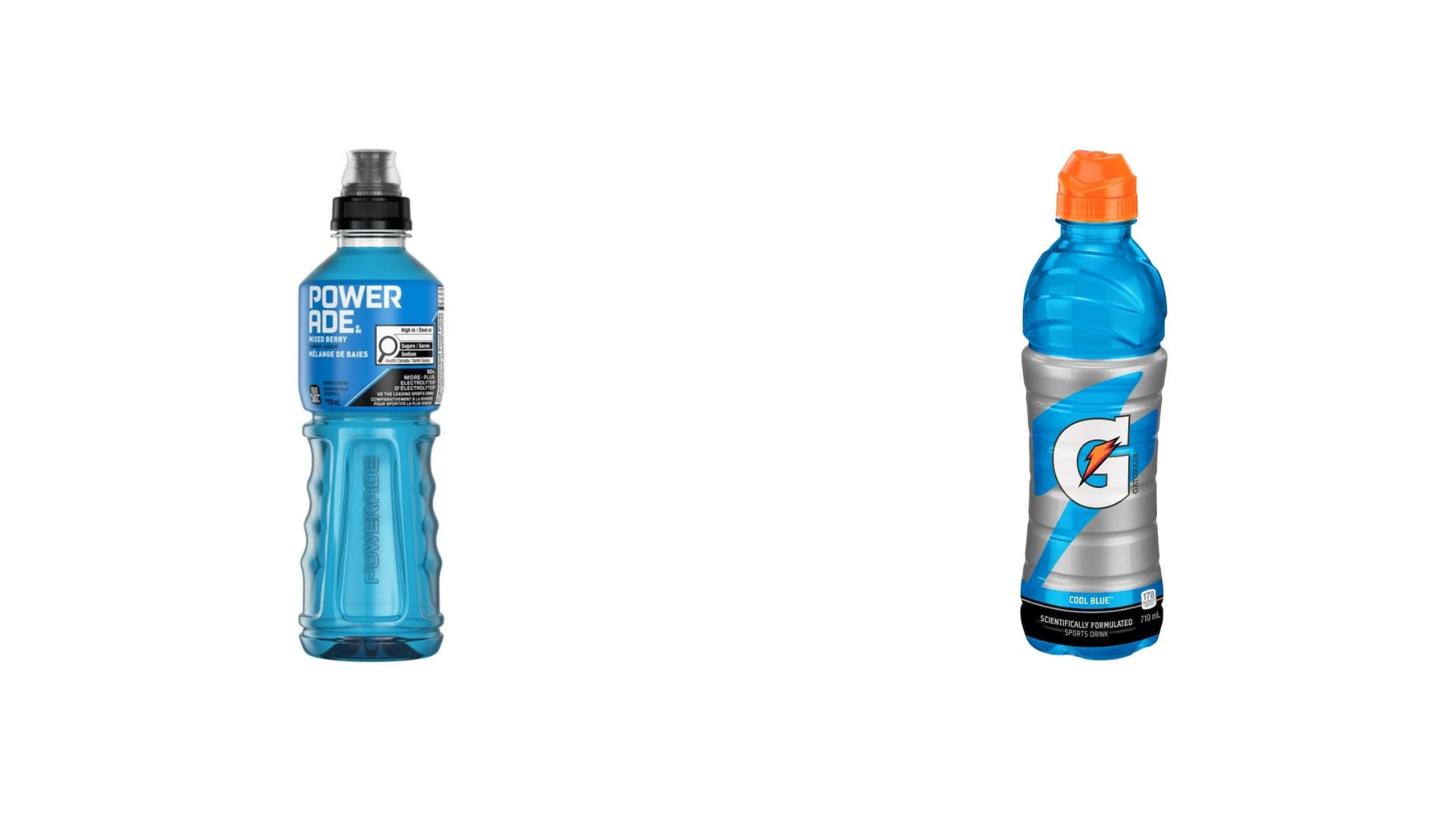
Powerade vs Gatorade — which is better in 2026?
Both are leading sports drinks designed for hydration during exercise. The main difference comes down to electrolyte levels and formulation. In standard 710 mL Canadian bottles, Powerade contains more sodium and potassium, while sugar content is nearly identical.
For most people, the difference is minor. For endurance athletes, it may be more relevant.
Key Differences: Powerade vs Gatorade
Electrolytes: Powerade contains more sodium and potassium per 710 mL bottle.
Sugar: Both contain over 40 g of sugar; difference is minimal.
Vitamins: Powerade includes added vitamins (C, B12); Gatorade standard formula does not.
Zero Versions: Both remove sugar and use synthetic sweeteners.
Flavor Profile: Powerade is generally sweeter; Gatorade is lighter
All comparisons below are based on standard 710 mL Canadian bottles.
Table of Contents
Quick Answers
Powerade vs Gatorade: Which is Better?
Both sports drinks score very close. Based on standard 710 mL bottles, Powerade contains more sodium (480 mg vs 300 mg) and potassium (150 mg vs 75 mg), with slightly less sugar. The nutritional differences are small, but Powerade provides more electrolytes per bottle.
👉 Jump to the “Which Is Better?” breakdown
Is Powerade Healthier (or Better for You) Than Gatorade?
Powerade contains more electrolytes and slightly less sugar. However, both contain over 40 grams of sugar per 710 mL bottle — exceeding recommended daily added sugar limits in a single serving.
👉 Jump to the Health Considerations section
What Has More Electrolytes, Gatorade or Powerade?
Powerade. A 710 mL bottle provides 480 mg of sodium and 150 mg of potassium, compared to 300 mg and 75 mg in Gatorade.
👉 Jump to the Electrolyte Comparison table
Blue Powerade vs Blue Gatorade: Who Wins?
Nutritionally, Blue Powerade contains more electrolytes and slightly less sugar. Flavor preference varies, and overall differences are small.
Powerade vs Gatorade: What’s the Difference?
Powerade and Gatorade are both carbohydrate-electrolyte sports drinks formulated for hydration during exercise. Each provides fluid, sugar for energy, and key electrolytes like sodium and potassium to replace what’s lost in sweat.
The main difference comes down to formulation details. Powerade contains more sodium and potassium, while also including added vitamins such as vitamin C and B12. Gatorade provides a similar carbohydrate profile but without added vitamins in the standard formula.
The gap isn’t dramatic — both products are nutritionally similar — but their electrolyte balance and ingredient emphasis are slightly different.
Electrolytes: Powerade vs Gatorade
Electrolytes are one of the main reasons people compare Powerade vs Gatorade.
What Sodium Does
Helps maintain fluid balance
Replaces sodium lost through sweat
Sodium is the primary electrolyte lost during exercise, especially in hot conditions.
What Potassium Does
Supports muscle and nerve function
Helps maintain overall electrolyte balance
Potassium works alongside sodium to support hydration and muscle function.
Electrolyte Comparison
| Electrolytes (Per 710 mL Bottle) | Powerade Mixed Berry | Gatorade Cool Blue |
|---|---|---|
| Sodium | 480 mg | 300 mg |
| Potassium | 150 mg | 75 mg |
All values are based on publicly available nutrition labels at the time of writing.
Which Has More Electrolytes?
Powerade contains more electrolytes. It provides significantly more sodium and roughly double the potassium per serving compared to Gatorade.
Does the Sodium Difference Matter?
The higher sodium content in Powerade may be helpful during long endurance sessions, heavy sweating, or hot-weather training. For shorter or moderate workouts, the practical difference between the two drinks is smaller, and either option can support hydration.
During prolonged or high-intensity exercise, athletes can lose substantial amounts of sodium through sweat. In that context, the 180 mg sodium difference between Powerade and Gatorade may become more relevant during longer sessions, but less important for short or moderate workouts.
Sugar Content: Powerade vs Gatorade
Sugar is one of the most searched parts of the Powerade vs Gatorade comparison.
Both drinks use sugar as a fast-digesting carbohydrate to support energy during exercise — but how different are they?
Sugar Comparison
| Per 710 mL Bottle | Powerade Mixed Berry | Gatorade Cool Blue |
|---|---|---|
| Total Carbohydrates | 41 g | 45 g |
| Total Sugars | 41 g | 42 g |
| Primary Sugar Source | Sugar, Glucose–Fructose | Sugar, Dextrose (Glucose) |
All values are based on publicly available nutrition labels at the time of writing.
Sugar Type Difference: Glucose vs Glucose–Fructose
The ingredient lists use slightly different carbohydrate sources:
Powerade: Sugar / glucose–fructose
Gatorade: Sugar and dextrose (glucose)
Glucose (dextrose) is absorbed directly into the bloodstream and can be used immediately for energy during exercise.
Fructose is absorbed in the intestine and processed first by the liver before being converted into glucose or stored as glycogen. It does not raise blood sugar as quickly as glucose.
Who Has the Advantage?
For most workouts, neither drink has a meaningful advantage. At the ~40–45 grams of sugar found in a single 710 mL bottle, performance differences are minimal.
During prolonged endurance exercise, Powerade’s glucose–fructose blend may offer a slight theoretical advantage because the two sugars use different intestinal transport pathways, potentially allowing higher total carbohydrate absorption at high intake levels. However, with a single bottle, this difference is unlikely to be noticeable.
Bottom line: For most people drinking one bottle during a typical workout, there is no clear advantage.
Ingredients Breakdown: What’s Inside Each?
When comparing Powerade vs Gatorade ingredients, both follow a similar core structure: water for hydration, carbohydrates for energy, electrolytes for sweat replacement, acidity regulators for stability, and flavoring agents for taste.
The differences are primarily in electrolyte concentration, sugar composition, added micronutrients, and certain additives.
Ingredients Comparison
| Per 710 mL Bottle | Powerade Mixed Berry | Gatorade Cool Blue |
|---|---|---|
| Calories | 160 | 180 |
| Fat | 0 g | 0 g |
| Carbohydrates | 41 g | 45 g |
| Sugars | 41 g | 42 g |
| Protein | 0 g | 0 g |
| Sodium | 480 mg | 300 mg |
| Potassium | 150 mg | 75 mg |
| Calcium | 10 mg | — |
| Vitamin C | 27 mg | — |
| Vitamin B12 | 2 µg | — |
| Magnesium | 4 mg | — |
All values are based on publicly available nutrition labels at the time of writing.
Performance Implications
From a performance standpoint, both drinks are designed to do the same job during exercise:
Fluids to support hydration
Carbohydrates to provide energy
Sodium and potassium to replace electrolytes lost in sweat
The most measurable difference is electrolyte concentration. Powerade contains more sodium and potassium per serving. This may be relevant for individuals who sweat heavily or train for extended periods.
Carbohydrate content is similar between the two, meaning energy delivery during exercise is comparable. While the sugar sources differ slightly (glucose–fructose blend vs dextrose emphasis), at the level found in a single bottle, the real-world performance difference is small for most workouts.
In practical terms, both serve the same functional purpose during exercise.
But what about overall health outside of training?
Health Considerations
From a general health standpoint, sugar is the biggest factor.
Each bottle contains over 40 grams of sugar — enough to exceed recommended daily added sugar limits in a single serving. For people not training intensely, regular consumption can add excess calories without meaningful hydration benefits.
Powerade’s Canadian formula includes added vitamins such as vitamin C and B12, while Gatorade’s standard formula does not. However, these vitamins are present in small amounts and do not significantly change the overall nutritional profile.
Both drinks also contain added colorings and flavorings. For example:
Powerade includes Brilliant Blue FCF (a synthetic dye).
Gatorade includes artificial flavoring and color additives.
These ingredients are added for appearance and taste, not performance or hydration.
Overall, sugar content remains the primary health consideration, while additives are a secondary factor for most people.
Powerade Zero vs Gatorade Zero
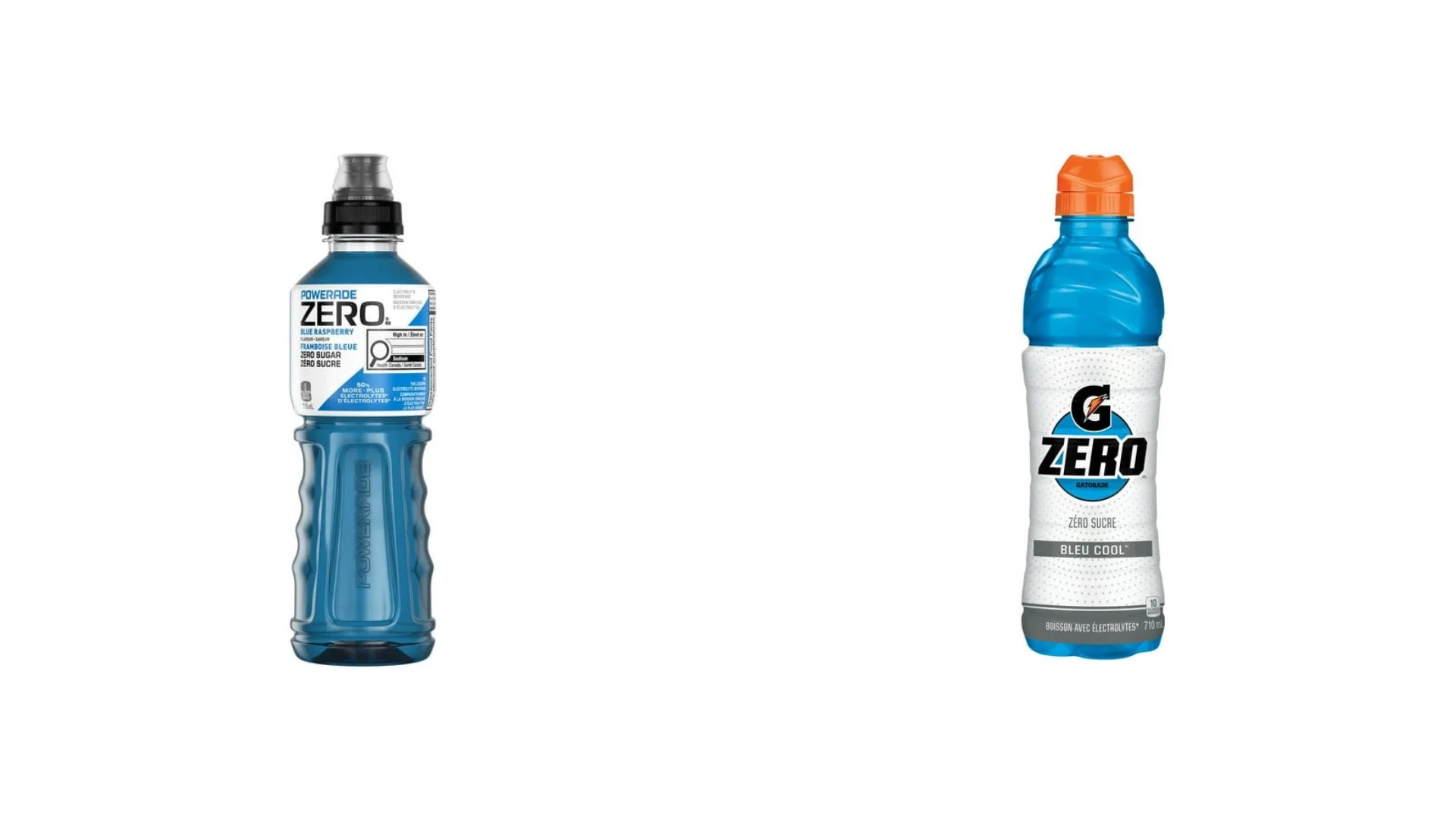
For those avoiding sugar, Powerade Zero vs Gatorade Zero becomes a comparison of electrolytes and sweeteners rather than carbohydrates.
| Per 710 mL Bottle | Powerade Zero | Gatorade Zero |
|---|---|---|
| Calories | 5 | 10 |
| Sodium | 480 mg | 320 mg |
| Potassium | 150 mg | 100 mg |
| Sugars | 0 g | 0 g |
| Sweeteners Used | Sucralose, Acesulfame-K | Sucralose, Acesulfame-K |
All values are based on publicly available nutrition labels at the time of writing.
Electrolyte Comparison
When comparing Powerade Zero vs Gatorade Zero electrolytes, Powerade Zero contains more sodium (480 mg vs 320 mg) and more potassium (150 mg vs 100 mg) per 710 mL bottle.
For individuals seeking higher electrolyte intake without sugar, Powerade Zero provides a higher electrolyte dose.
However, both Zero versions contain no carbohydrates. During prolonged endurance exercise (typically 60–90+ minutes), carbohydrate intake can help maintain blood glucose and delay fatigue. In those situations, standard versions containing sugar may better support performance.
For shorter workouts or general hydration, Zero options can provide electrolytes without added sugar.
Sweetener Differences
Both Powerade Zero and Gatorade Zero use the same non-caloric sweeteners:
Sucralose
Acesulfame potassium (Ace-K)
These are high-intensity artificial sweeteners that provide sweetness without adding sugar or calories.
Sucralose is a modified form of sucrose (table sugar) that the body does not metabolize for energy. Most of it passes through the digestive system without being absorbed.
Acesulfame potassium is also not metabolized for energy and is largely excreted unchanged.
Because they are not carbohydrates, these sweeteners do not raise blood glucose and do not provide fuel during exercise.
Are Artificial Sweeteners “Healthy”?
Artificial sweeteners such as sucralose and acesulfame potassium are approved for use within established intake limits and have been evaluated for safety at typical consumption levels.
They are chemically manufactured, non-caloric compounds designed to provide sweetness without raising blood sugar or adding energy.
Regulatory agencies consider them acceptable within recommended intake ranges. However, they do not provide nutritional value, and research on long-term health effects continues as scientific understanding evolves.
They function as sugar substitutes and do not provide nutritional value.
Bottom Line: Zero versions remove sugar and calories and use synthetic sweeteners instead.
From an electrolyte standpoint, Powerade Zero provides more per bottle. From a hydration-only standpoint, both function similarly.
Taste & Real-World Preferences
Powerade and Gatorade differ slightly in sweetness and flavor intensity.
How They Compare on Flavor
Powerade is generally described as sweeter and more intense.
Gatorade is often described as lighter and less sweet.
If you prefer a stronger, sweeter flavor, Powerade may appeal more.
If you prefer a milder, smoother taste, Gatorade may be a better fit.
Blue Powerade vs Blue Gatorade
The blue flavors are among the most popular for both brands.
Powerade Blue (Mixed Berry / Blue Raspberry) tends to taste sweeter and more candy-like.
Gatorade Cool Blue is generally perceived as smoother and slightly less sweet.
From a nutrition standpoint, Blue Powerade contains more sodium and potassium per bottle. From a taste standpoint, the difference comes down to sweetness and intensity.
Which Is Better: Powerade or Gatorade?
The short answer: For most people, there is no meaningful difference between Powerade and Gatorade. The better choice depends on your goal — electrolyte replacement, sugar reduction, or everyday hydration.
Here’s the clear breakdown:
| Legend: Winner = best choice · Tie = comparable options · — = not the best fit | |||||
|---|---|---|---|---|---|
| Category | Powerade | Powerade Zero | Gatorade | Gatorade Zero | Water |
| Electrolytes | Winner | — | — | — | — |
| No Sugar / Lowest Sugar | — | Tie | — | Tie | Winner |
| Short Workouts | Tie | Tie | Tie | Tie | Winner |
| Heavy Sweating / Endurance | Winner | — | — | — | — |
| Everyday Hydration | — | — | — | — | Winner |
Better for Electrolytes → Powerade
Powerade contains more sodium and potassium per 710 mL bottle.
Better for Sugar Content → Tie
Gatorade and Powerade contain over 40 g of sugar per bottle. The difference is minimal and neither is low in added sugar.
Better for Short Workouts → Tie
For workouts under 60 minutes, electrolyte differences between Powerade and Gatorade are unlikely to matter. Water is typically sufficient for hydration.
Better for Heavy Sweating or Endurance Training → Powerade
During prolonged exercise or high-sweat conditions, sodium losses increase significantly. Because Powerade provides more sodium and potassium, it may offer a small advantage for fluid and mineral replacement in those situations.
Better for Everyday Use → Water
For general daily hydration, water is the simplest and healthiest option.
Final Verdict
Powerade has a slight edge for heavy sweating or endurance training due to higher electrolyte levels.
For short workouts or everyday hydration, water is typically sufficient.
For most people, the overall differences between Powerade and Gatorade are small.
Alternatives to Traditional Sports Drinks
Powerade and Gatorade follow a similar core model: fluid, carbohydrates (or artificial sweeteners in Zero versions), and electrolytes.
Some individuals explore alternatives based on preferences such as:
Lower sugar formulations
Different electrolyte concentrations
Powdered or concentrate formats
Broader ingredient profiles beyond carbohydrates and sodium
Hydration products vary in structure. Some focus strictly on electrolytes, while others include additional nutrients such as vitamins, amino acids, or botanical extracts.
If you want a side-by-side comparison that includes an alternative lower-sugar hydration formula, see: sports drink alternatives.
Frequently Asked Questions
Is Powerade better than Gatorade?
For most workouts, there is no major performance difference. Powerade contains more electrolytes, but overall hydration support is similar for typical exercise.
Is Gatorade healthier than Powerade?
Neither is significantly healthier. Both contain over 40 grams of sugar per 710 mL bottle, exceeding recommended daily added sugar limits in a single serving.
What has more electrolytes: Powerade or Gatorade?
Powerade. A 710 mL bottle contains 480 mg of sodium and 150 mg of potassium, compared to 300 mg and 75 mg in Gatorade.
Which has more sugar: Powerade or Gatorade?
Gatorade, slightly. It contains 42 grams of sugar per 710 mL bottle versus 41 grams in Powerade, though the difference is minimal.
Powerade Zero vs Gatorade Zero: What’s the difference?
Both contain no sugar and use synthetic sweeteners. Powerade Zero provides more sodium and potassium per bottle, while hydration performance is otherwise similar.
What’s the difference between Powerade and Gatorade?
The main difference is electrolyte concentration. Powerade contains more sodium and potassium, while sugar content and overall formulation are very similar.
Which is better for you: Powerade or Gatorade?
They are nutritionally similar and designed for exercise hydration. Powerade provides more electrolytes, but both are high in added sugar in their standard versions.
Resources
Powerade Mixed Berry 710 mL Bottle. Coca-Cola. 2026.
Gatorade Cool Blue 710 mL Bottle. Real Canadian Superstore. 2026.
Powerade Zero Blue Raspberry 710 mL Bottle. Walmart Canada. 2026.
Gatorade Zero Cool Blue 710 mL Bottle. Walmart Canada. 2026.
How Much Sugar Is Too Much? American Heart Association. 2024.
This article is provided for informational and educational purposes only and does not constitute medical advice. The information presented is not intended to diagnose, treat, cure, or prevent any disease.
Nutritional values and ingredient information are based on publicly available product labels at the time of writing and may change.
-
101 Educational Series
- Aug 14, 2023 Cobalt Rich Foods: Benefits, Daily Requirement & Is It Safe?
- Jan 21, 2023 Selenium 101: How Much Selenium Do You Really Need?
- Jan 5, 2023 Zinc 101: How Much Zinc Do You Really Need?
- Jan 5, 2023 Sodium 101: How Much Sodium Do You Really Need?
- Jan 5, 2023 Potassium: Benefits, Deficiency, and the Best Supplements to Take
- Jan 5, 2023 Phosphorus 101: How Much Phosphorus Do You Really Need?
- Jan 5, 2023 How Much Magnesium Per Day Do You Need? Daily Intake, Deficiency Signs & Supplement Tips (Canada)
- Jan 5, 2023 Iron 101: How Much Iron Do You Really Need?
- Jan 5, 2023 Calcium 101: How Much Calcium Do You Really Need?
-
Health Risks
- Apr 24, 2025 What to Avoid for a Healthy Lifestyle: The 10 Bad Habits
- Mar 6, 2025 Dangerous Foods in Grocery Stores and What to Avoid
- Feb 7, 2025 The Dark Side of Soda – Hidden Dangers, Health Effects, and Better Alternatives
- Feb 3, 2025 The Hidden Dangers of Microplastics
- Jan 29, 2025 The Hidden Dangers of Fried Foods – Why Even "Cheating" Harms Your Health
- Jan 4, 2025 From Liver Damage to Cancer: The Dark Side of Drinking
- Nov 4, 2024 Sugar: The Silent Killer
- May 28, 2019 The 12 Bad Foods by Dr. Peter Glidden
-
Nutrition
- Jan 20, 2025 Hydration for Wellness: Daily Hydration Tips & Benefits
- Jan 15, 2025 Unlocking the Benefits of Apple Cider Vinegar for Your Health
- Sep 13, 2024 7 Powerful Reasons to Start Using Collagen Now
- Jan 27, 2023 Amino Acid Supplements: Are They Safe, Worth It, and Right for You?
- Jan 9, 2023 ZRadical™: Unlocking the Power of Fucoidan
- Jan 1, 2023 The 6 Essential Nutrients Your Body Needs
-
Youngevity Products
- Jan 13, 2025 The Top 7 Reasons to Supplement with Plant Derived Minerals
- Nov 10, 2024 What Are the Best Youngevity Products for Beginners?
- Nov 3, 2024 Top 7 Reasons to Supplement with Ultimate EFA Plus™
- Nov 1, 2024 Top 7 Reasons to Supplement with Beyond Osteo FX™
- May 22, 2024 Complete Guide to Beyond Tangy Tangerine® (BTT): Benefits, Reviews, Comparisons & FAQs
- Nov 14, 2022 How Much Youngevity Should You Take?
-
Fitness
- Jan 2, 2025 The Importance of Working Out as You Age
- Dec 20, 2024 The Transformative Benefits of Infrared Saunas
- Dec 20, 2024 Living a Healthier Life: How Yoga Can Transform Your Wellness
- Dec 4, 2024 Squash Sport: The Healthiest Workout You’ve Never Tried
-
Mood & Hormone Balance
- Jan 21, 2026 When Stress Feels Like Too Much (And What Helps)
- Jan 22, 2025 Balancing Hormones Naturally: What You Need to Know
- Feb 3, 2023 Youngevity’s XeraFem™: Natural Hormonal Support for Women
- Jan 30, 2023 Youngevity's XeraTest™: Natural Hormonal Support for Men
-
Product Comparisons
- Feb 22, 2026 Powerade vs Gatorade: Which is Better? (2026)
- Feb 18, 2026 Vitamin Water vs Gatorade vs Powerade: Which Is Better?
- Jan 9, 2023 Youngevity vs. AG1 Athletic Greens
- Nov 9, 2022 Visalus vs. USANA vs. Youngevity
-
Bone & Joint Health
- Feb 5, 2025 The Benefits of Glucosamine for Joint and Bone Health
- Sep 13, 2024 7 Powerful Reasons to Start Using Collagen Now
- Sep 11, 2024 Best Supplements for Joint Health, Comfort and Flexibility
-
Weight Loss
- Apr 18, 2025 Considering Weight Loss? Here’s What No One Tells You
- Nov 5, 2024 Your Ultimate Guide to Natural Weight Loss
- Jan 24, 2023 Slender FX™ REV: Unlocking Your Weight Loss Potential
-
Digestion
- Nov 7, 2024 How to Improve Your Digestive Health Naturally
- Jan 9, 2023 Ultimate Microbiome™: The Key to a Happy Gut
-
Energy
- Sep 10, 2024 Top 7 Ways to Boost Your Energy Levels
- May 22, 2024 Why Youngevity’s Rebound FX™ Is Canada’s Top Choice for Athletes
-
Health Issues
- Aug 18, 2023 Can Diet and Supplements Help Combat Night Blindness?
- Aug 11, 2023 How to Combat Dry Skin Naturally
- Immunity
-
Research
- Jan 1, 2020 Clemson University's Research on Youngevity® Products
- Jan 1, 2020 Youngevity's NSF and IFOS Certifications
- Essential Oils
